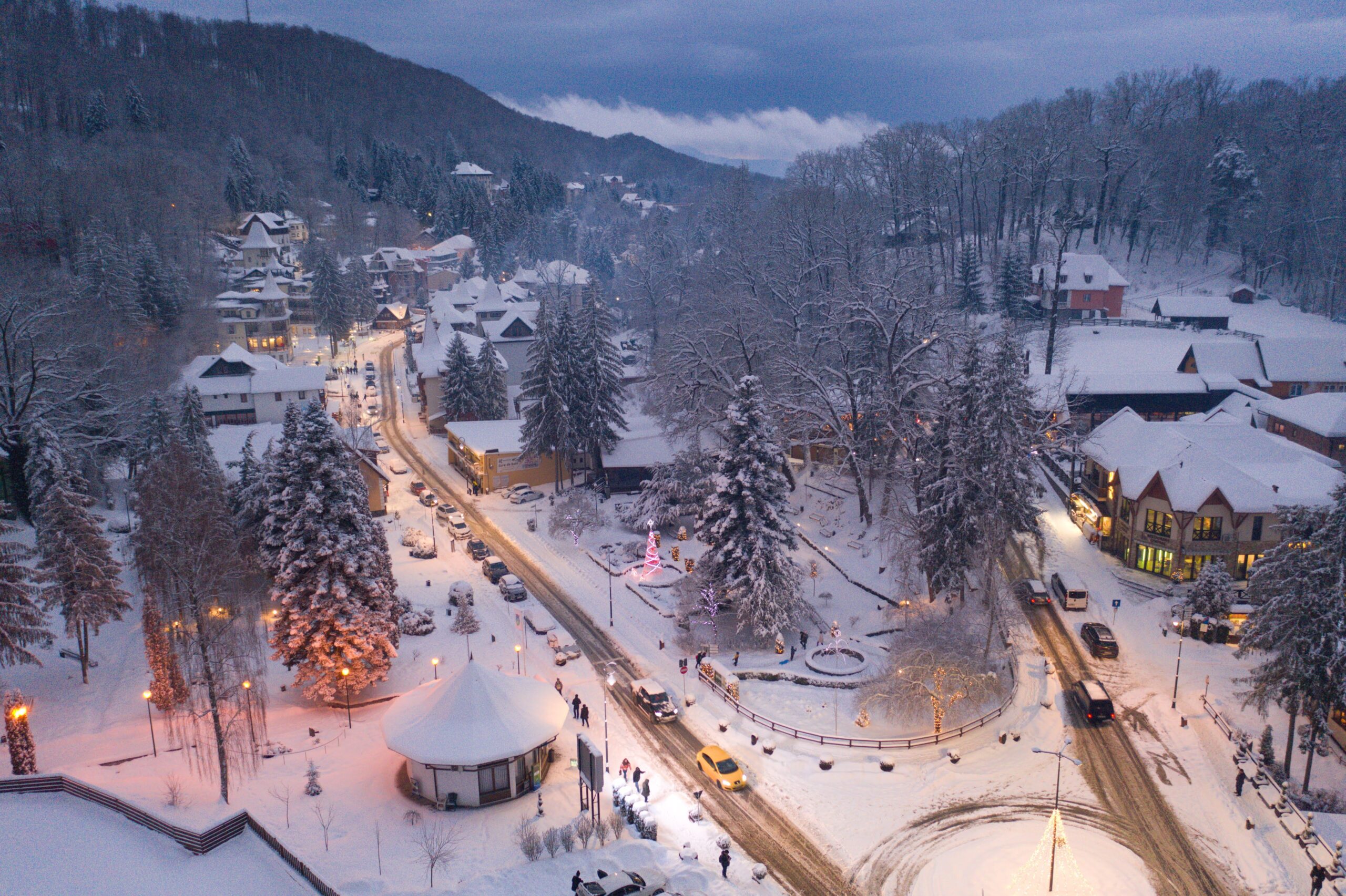
If you search “Romania,” you will get castles. Bran Castle, sold to you as Dracula’s, which it essentially wasn’t. You’ll get Bucharest’s Palace of the Parliament, a building so large it functions mainly as a fact. You’ll get the painted monasteries and the Carpathian mountains, all genuinely worth seeing, none of them the Romania I know.
The Romania I know isn’t a postcard, and it isn’t only one city. It started in Galați, on the Danube, where my father worked, and over twenty years it grew into a particular street in Bucharest, a café in Iași, the corners of a country where almost no tourist has reason to go. That’s exactly why I keep going back.
I first lived in Romania from 2003 to 2006, and I’ve kept going back ever since. I have friends across the country now, in Bucharest, in Iași, in Galați, some I’ve known for over twenty years. Not contacts, not “my guy in Romania,” but friends, the kind who would put me up indefinitely and be mildly offended if I stayed in a hotel. One of them I’ve watched go gray at the same rate I have. That relationship is older than most companies I’ve worked for.
What that buys you is a different country. Not the country of the guidebook, the one where you know which café has the table the regulars leave empty out of habit, which market stall is honest about the fish, which neighbor will tell you the truth about a landlord. The texture of a place only shows itself to people who stay, and most coverage of Romania is made by people passing through.
Here is what nobody puts in the brochure, in both directions.
The honest negatives first, because I won’t insult you: the bureaucracy can be slow and fond of paper; some infrastructure outside the big cities is patchy; and the winters are real. If someone sells you Eastern Europe with no downsides, close the tab.
And the things that don’t make the lists: food that is absurdly good and absurdly cheap, made by people who’d find the phrase “farm to table” funny because there was never anywhere else for it to come from. A safety, walking home late, that I no longer take for granted. A social fabric where people have time for each other because they’ve decided to. And the Danube, which I’ll write about until you’re tired of it, moving through the middle of ordinary life like it has nowhere urgent to be.
I keep going back because the version of Romania I found isn’t for sale and can’t be toured. It was built by living there, and by a father who worked there before me. That’s not a thing a travel channel can replicate, and it’s the only thing I’m actually offering: a place seen from the inside, by someone who stayed.
Romania is where this started for me, but it isn’t where it ends. The same thing, the texture, the pace, the friendships, is waiting a few borders over: in Poland, in the Czech Republic, in Slovakia, in half a dozen countries the postcards flatten into one. Romania was simply my doorway in.
If that’s the kind of Eastern Europe you’ve suspected exists behind the postcards, it does. Read along, and I’ll keep showing you the rest of it.