Most “where to spend winter in Europe” lists are really lists of where to be warm cheaply. They rank places by the price of a room and the temperature in January, and they assume you will move on in a week. This is the other kind. If you can go anywhere, the question is not where it is cheapest, or even where it is warmest. It is where you would actually want to live from December to February.
I lived in Galați, on the Danube, for about three years, and Romanian winters are not mild. They don’t pretend to be. But the lists leave something out. The cold is rarely the problem. The dark is, and so is a town that has closed for the season.
So here is a shortlist for people who have the choice. It is not a ranking. Each place gets its flaw first, because the flaw is how you choose.
First, what actually matters in winter
Light, more than heat. On the shortest day of the year, London gets under eight hours of daylight. Seville and Malta get roughly nine and a half, and Funchal, on Madeira, nearly ten. That is about what Atlanta gets, where I live. Nearly two extra hours of light is the difference between a winter you endure and one you enjoy.
Quiet, not dead. Off-season is wonderful in a real city and bleak in a resort. A place where people live and work all year keeps its restaurants, theaters and markets open in January. A place built for summer visitors shuts its best hotels, and you end up the only guest in a dining room that seats two hundred. This is why most of the Greek islands, lovely in May, make a lonely winter.
Indoor comfort. Southern Europe builds for summer. Plenty of older apartments in Lisbon and Seville can be colder inside in January than a house in Atlanta or London. A good hotel, or an apartment with proper heating that you have checked rather than assumed, matters more here than the view.
Your days. A full winter, December through February, is roughly 90 days, which is the entire Schengen short-stay allowance. All five places below, Romania included, are inside Schengen. If you want the whole season, look into a national long-stay visa before you book. I’m writing a full guide to staying longer than 90 days.
Seville, Spain: the one with the most light
The flaw: winter nights are genuinely cold, and plenty of older buildings were built to keep heat out, not in. It also rains more in winter than its sunny reputation suggests.
Then there is everything else. The average January high is around 16°C (about 61°F), with something like 180 hours of sunshine in the month, and the light is extraordinary, low and gold through the orange trees. It is a real city with a real winter life. The bars and restaurants are full of people from Seville, not visitors, and nothing is performing for you. Best for someone who wants a proper Spanish city with sun on most days and doesn’t mind a sweater at dinner.
Lisbon and Cascais, Portugal: the city and the sea
The flaw: Lisbon is wetter and cooler in winter than people expect, with an average January high of about 14°C (57°F). Older apartments can be damp and cold, and the hills are slippery in the rain.
The case for it is that you can have both a capital and a coastline. Lisbon has the culture, the food and the good hotels. Cascais, a short train ride along the coast, is calmer, with a seafront walk that is better in January than in August because you can actually walk it. Best for someone who wants a city’s conveniences and a little salt air, and who would rather have character than heat.
Madeira, Portugal: the warmest, and the quietest
The flaw: it is an island, and a fairly small one. Some will find it sleepy. From America you will usually connect in Lisbon or another European hub, and the terrain is steep enough that you will be driven more than you walk.
The reward is the mildest winter on this list. Funchal’s average January high is about 20°C (68°F), and the days are nearly as long as anywhere in Europe in December. It is green, orderly and unhurried, with good hotels and a long habit of winter visitors. Best for someone who wants warmth and calm above everything else, and has books to read.
Malta: the compact one
The flaw: it is crowded and heavily built-up, the wind in winter is real, and the traffic is a test of character. If you want open space, look elsewhere.
What it does offer is a mild winter, typically in the mid-teens Celsius (around 59°F) by day, short distances, English widely spoken, and Valletta, which is one of the most handsome small capitals in Europe. Everything is near everything else. Best for someone who wants ease, a little grandeur and very little friction.
Transylvania in December: the contrarian choice
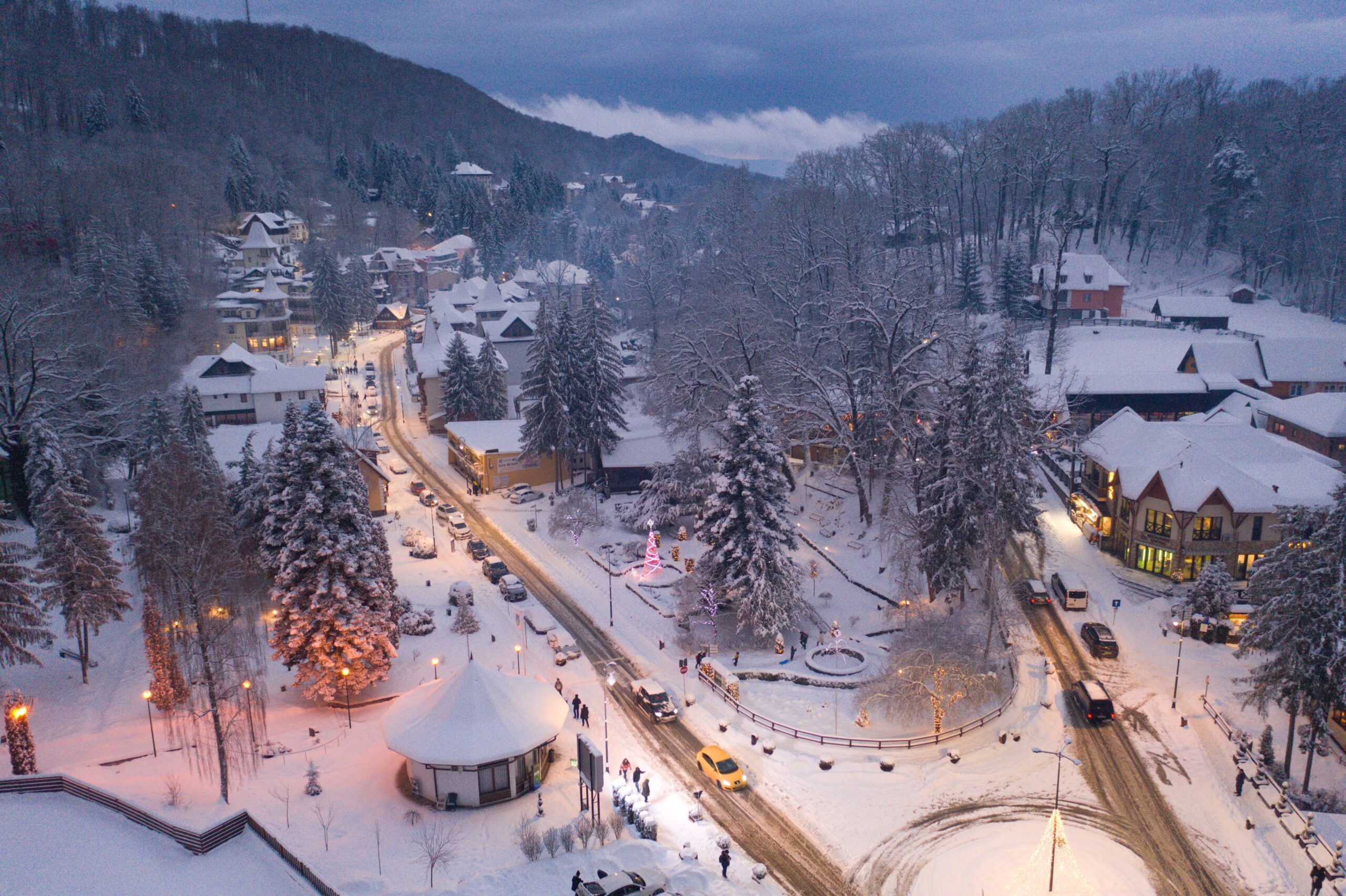
The flaw first, as always: this is a real winter. Snow and freezing nights are normal, the days are short, and nobody in Brașov or Sibiu will pretend otherwise. As I’ve written before, the winters are real.
And yet December is one of the best months I know in Romania. In Sibiu, the Christmas market fills the Piața Mare (the big square) from mid-November into early January. This year it runs from 13 November to 3 January. The old towns look the way Christmas cards try to look, the food is built for cold weather, and the warmth is indoors and among people. I wouldn’t spend all of January there. I would spend the run-up to Christmas there, and then go south.
This is the place the lists never include. It is also, for me, the one with the most meaning. Romania is the door my father opened, and winter is when it feels most like itself.
How I would put a winter together
If I were planning a whole season from scratch, it would look something like this. December in Transylvania, for the cold, the markets and the food. Then January and February somewhere with light: Seville if I wanted a city, Madeira if I wanted quiet. Two bases, not five. A good apartment or a hotel I’d stay in for weeks, booked well ahead, with the heating checked.
I will concede the case for chasing the sun from place to place. Some people genuinely enjoy a new city every week, and I have no quarrel with them. For a long time I’d have been one of them, if I had taken the time off at all. But a winter is long enough to live somewhere, not just to visit it, and the pleasure of a season is in the repetition: the same café, the same walk, the waiter who stops asking. That is slow travel, and I’ll be writing soon about how to do it in comfort.
There is no best answer, because the question depends on your temperament. Some people need the sun. Some need a city. A few, and I count myself among them, would take a cold December somewhere they feel at home over a warm one somewhere they don’t. If you are still deciding where you might stay longer than a season, these five cities are a place to start.
Start with the place your imagination went to first. And if you’d like the longer letters, the newsletter is where I write them.
Questions people ask
Where is warm in winter in Europe?
Of the places here, Madeira is the warmest, with an average January high of about 20°C (68°F) in Funchal. Seville, Malta and Lisbon are milder than most of Europe, in the mid-teens Celsius, but none of them is beach weather in January.
Where is the best place to spend winter in Europe?
It depends on what you want from it. For light and a real city, Seville. For warmth and calm, Madeira. For culture with a coastline, Lisbon and Cascais. For a proper Christmas, Transylvania in December.
What are the best European snowbird destinations?
For a stay of a month or more, look for places people live in all year: Seville, Lisbon and Cascais, Madeira and Malta. Resort islands that close for the season make lonely winters.
Is Europe cheaper in winter?
Often, outside the Christmas and New Year weeks, especially in places that depend on summer visitors. But the bargains are usually in towns that are quiet for a reason. In real cities, good hotels hold their prices better.
How long can I spend the winter in Europe?
Without a visa, a full December-to-February winter in Schengen uses about 90 days, the whole short-stay allowance. Longer stays need a national long-stay visa.
Sources
- IPMA (Portuguese Institute for Sea and Atmosphere), climate normals 1991-2020, Funchal: https://www.ipma.pt/bin/file.data/climate-normal/cn_91-20_FUNCHAL.pdf
- IPMA, climate normals 1991-2020, Lisbon (Gago Coutinho): https://www.ipma.pt/bin/file.data/climate-normal/cn_91-20_LISBOA_GAGO_COUTINHO.pdf
- AEMET (Spanish State Meteorological Agency), climate normals, Seville Airport: https://www.aemet.es/es/serviciosclimaticos/datosclimatologicos/valoresclimatologicos?l=5783
- MaltaToday, reporting the Malta Met Office January 2025 summary (mean 14.5°C, 1.6°C above normal): https://maltatoday.com.mt/news/national/133727/met_office_january_welcomes_2025_with_aboveaverage_temperatures_dry_conditions_
- NOAA Solar Calculator (day length at the December solstice): https://gml.noaa.gov/grad/solcalc/
- Wall-Street.ro, Christmas market calendar 2026 (Sibiu: 13 November 2026 to 3 January 2027, Piața Mare): https://www.wall-street.ro/articol/lifestyle/calendarul-targurilor-de-craciun-2026
- European Commission, Schengen area: https://home-affairs.ec.europa.eu/policies/schengen/schengen-area_en